

Key takeaways
Immigration case tracking helps attorneys and clients stay informed about USCIS case progress and deadlines.
Every USCIS application includes a 13-character receipt number that can be used for tracking.
Online tools, such as the USCIS Case Status Online system and myUSCIS, simplify case monitoring.
Automated immigration case tools and reporting features in platforms like DocketWise make it easier to track multiple cases efficiently.
Immigration case tracking is a crucial part of navigating the U.S. immigration process—helping applicants, attorneys, and organizations stay informed, meet deadlines, and respond quickly to updates from U.S. Citizenship and Immigration Services (USCIS). Whether you’re managing a single application or hundreds across your firm, efficient immigration case tracking ensures no step is overlooked and every client stays informed throughout their journey.
In this guide, you’ll learn how to check USCIS case statuses, interpret receipt numbers, and use immigration case tracking software to improve accuracy and efficiency in case management.
What is USCIS case tracking?
USCIS case tracking is the process of monitoring immigration applications through the U.S. Citizenship and Immigration Services (USCIS) system using a unique 13-character receipt number. This number, issued when an application is received, allows both applicants and attorneys to check real-time case status updates through official government tools.
Receipt numbers make USCIS case tracking reliable and straightforward. By entering this number on the USCIS website or within a case management platform, users can view major milestones such as when the case is received, when additional evidence is requested, or when a decision has been made.
Tracking cases online helps reduce uncertainty, improve communication between legal teams and clients, and ensure that no critical update is missed during the immigration process.
Key trends in immigration case processing
Understanding the trends in immigration case processing can help your firm effectively manage client expectations and optimize operations. The section below outlines key areas, including average processing times, common reasons for delays, and recent developments that impact case processing timelines.
Average processing times
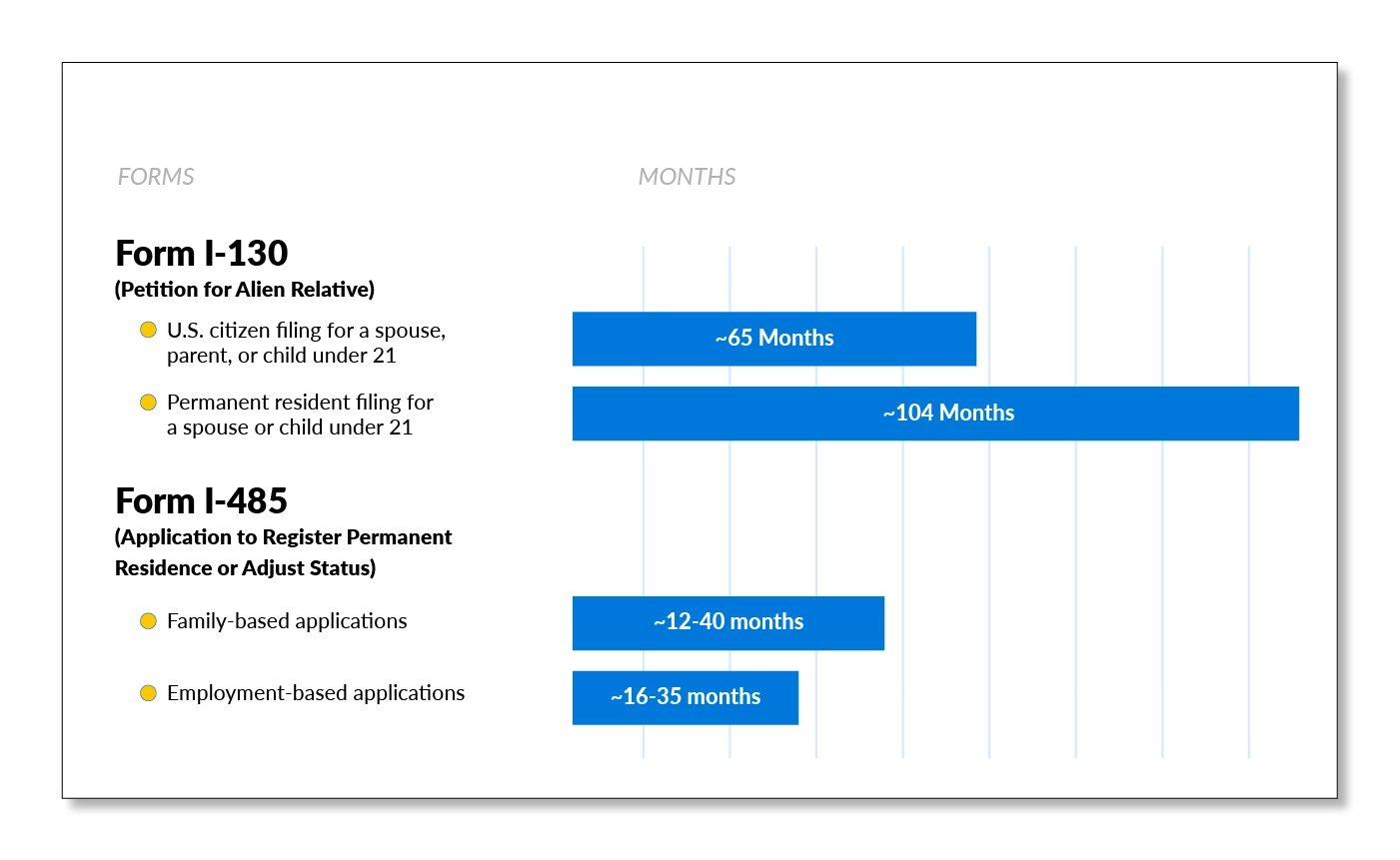
Processing times for immigration applications vary depending on the type of form and the USCIS service center handling the case. Below are the current average timelines for some commonly filed applications:
Form I-130 (Petition for Alien Relative)
U.S. citizen filing for a spouse, parent, or child under 21: 80% of cases are completed within 65 months
Permanent resident filing for a spouse or child under 21: 80% of cases are completed within 104 months
Form I-485 (Application to Register Permanent Residence or Adjust Status)
Family-based applications: approximately 12-40 months
Employment-based applications: approximately 16-35 months
These timeframes can vary between USCIS service centers and are subject to change. For the most accurate information, visit the USCIS Processing Times page.
Common reasons for delays
Several factors contribute to delays in immigration case processing, including:
A high volume of applications: USCIS processes millions of cases annually, and periods of increased demand can result in backlogs.
Incomplete or incorrect applications: Missing information or insufficient documentation often result in Requests for Evidence (RFEs), which can significantly prolong the adjudication process.
Comprehensive background checks: Security screenings, such as FBI Name Checks, may introduce additional delays if issues arise during the review process.
Shifts in policy or resource allocation: Adjustments to immigration policies or staffing levels within USCIS can affect processing timelines.
Recent trends
Recent years have seen notable shifts that impact immigration case processing times, such as:
Policy changes: Variations in immigration policies, such as the suspension and later resumption of Premium Processing Services, have directly influenced processing timelines.
Adoption of technology: USCIS has been introducing electronic filing and case management systems, which aim to streamline operations and potentially reduce delays over time.
Operational disruptions: Unexpected events such as natural disasters, public health emergencies, or system outages can lead to office closures and staffing shortages, delaying case processing.
Immigration law firms can leverage these insights to better guide their clients, anticipate challenges, and develop strategies for efficient case management. For example, ensuring accurate application submissions and monitoring policy changes can help minimize delays. Regularly checking your clients' immigration court case status through the USCIS case status online tool also helps keep clients informed.
Understanding the USCIS case receipt number
Each USCIS receipt number provides key information about where and when an application was filed.
A receipt number—sometimes referred to as a USCIS identifier—is printed on official notices, such as the Form I-797 Notice of Action. It’s typically 13 characters long and starts with three letters that identify the USCIS service center (for example, “WAC” for California).
The remaining 10 numbers indicate the fiscal year, workday, and case number. You can use this number to track your USCIS case online.
How to track USCIS immigration case status online
There are several reliable ways to monitor USCIS cases. Immigration professionals and applicants can use official government tools or immigration tracker software to stay updated.
1. USCIS Case Status Online tool
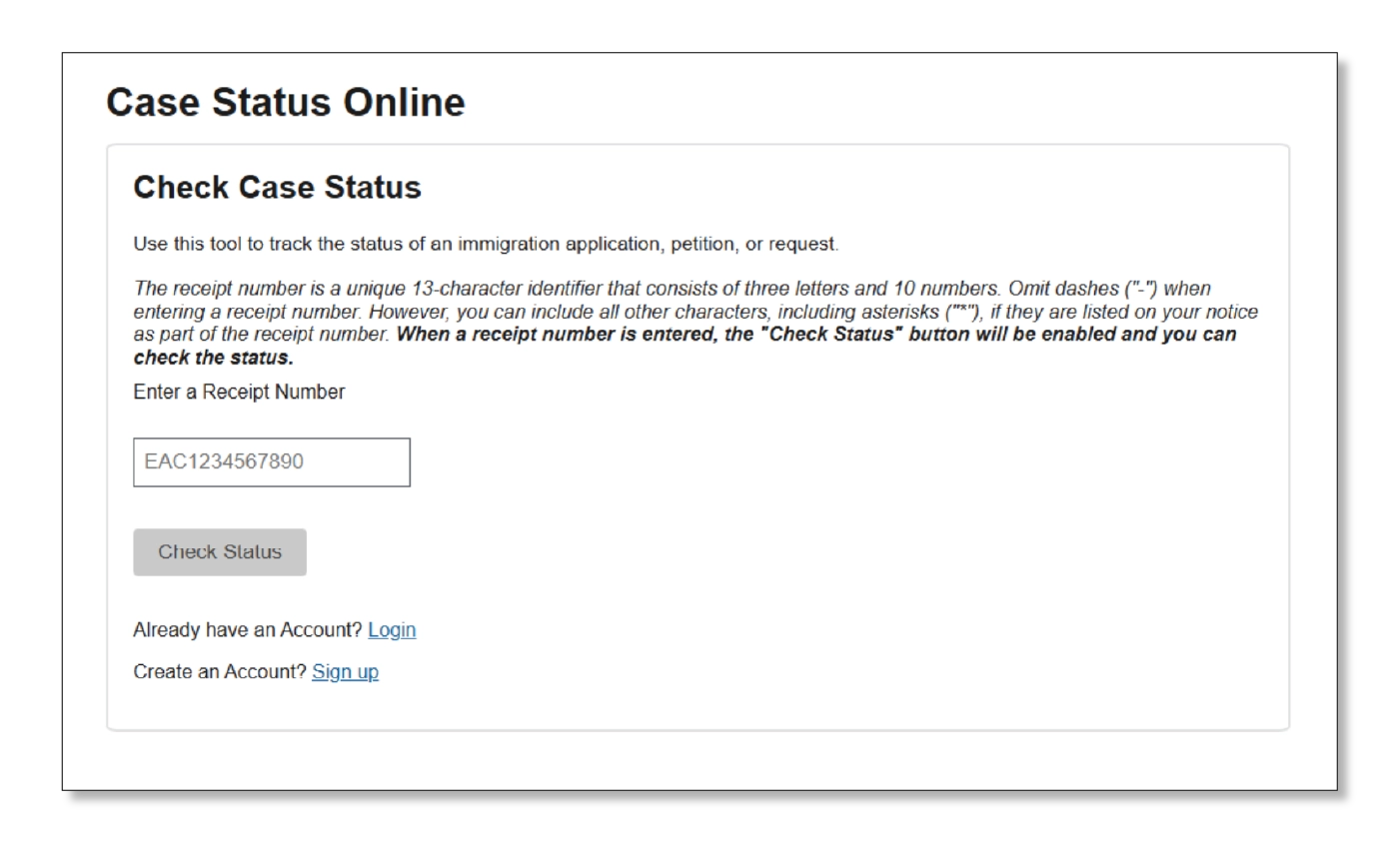
The USCIS Case Status Online tool is the most direct method for checking your immigration case status. Here’s how to use it:
Go to uscis.gov/casestatus.
Enter your 13-character receipt number (without dashes).
Review your current case status, such as “Received,” “Request for Evidence,” or “Approved.”
This tool provides real-time updates directly from USCIS and is the most reliable source for current case information.
2. myUSCIS account
A myUSCIS account allows you to monitor all your pending applications in one place. It provides digital notifications, document access, and the five most recent actions for each case.
Benefits of a myUSCIS account:
Track multiple cases in one dashboard
Receive automatic email or text alerts
Access digital copies of notices and forms
3. Immigration case tracking software
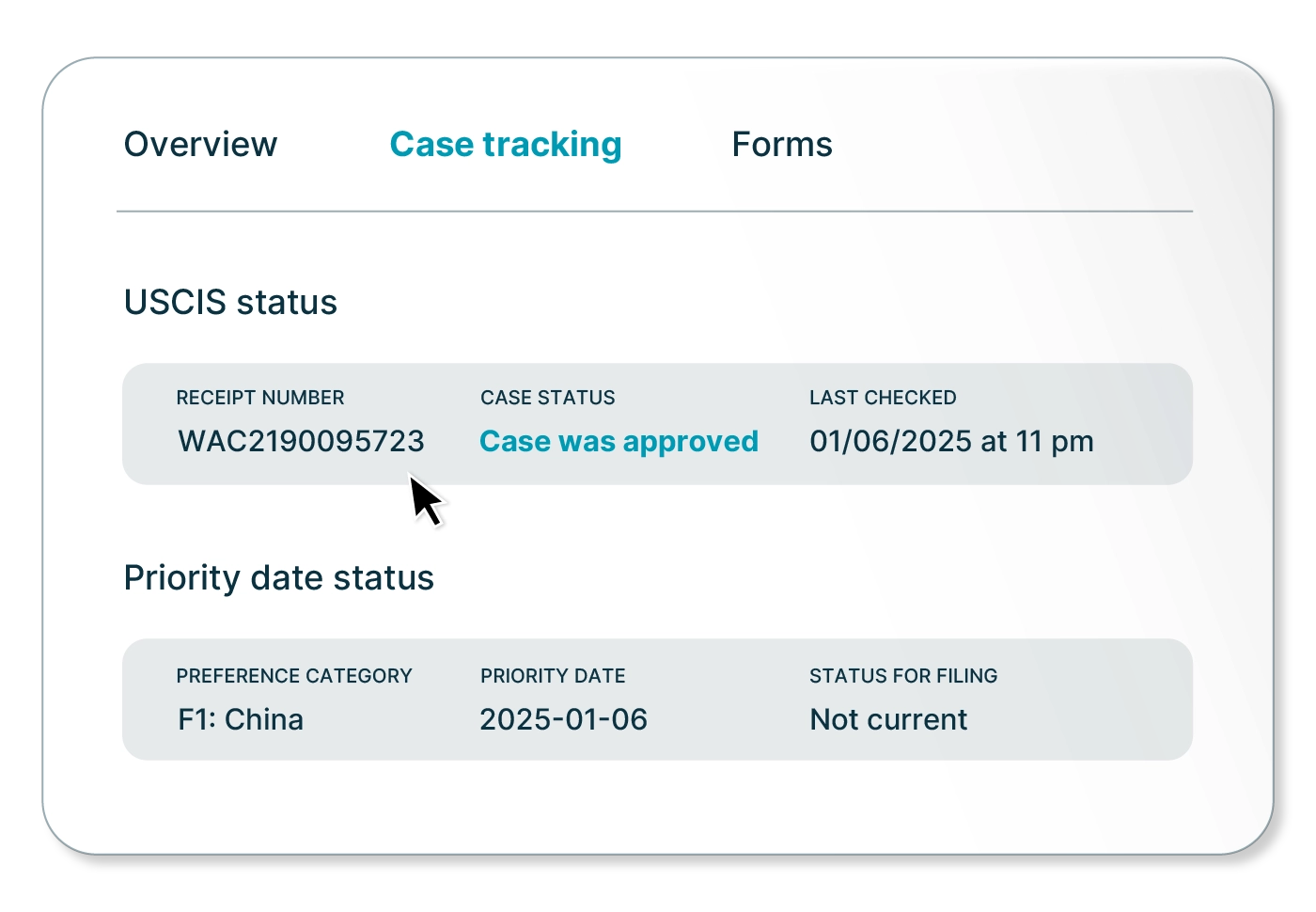
For immigration lawyers, using specialized software provides additional control and automation. Immigration case tracking software, such as DocketWise, integrates directly with USCIS systems to sync real-time updates.
Here’s how it works:
Add receipt numbers: Input your client’s USCIS receipt number to enable automatic tracking.
Check for updates: View status changes directly in your dashboard or rely on automatic update notifications.
Share updates: Provide clients with access through a secure portal for transparency and communication.
This approach helps reduce manual work and ensures that case tracking remains accurate and organized.
4. USCIS Contact Center
If your receipt number isn’t recognized online, you can contact the USCIS Contact Center at 1-800-375-5283. Be prepared to verify your identity and have your receipt number ready. This option can take longer, but allows you to speak directly with a representative for assistance.
Common challenges with immigration case tracking
Even with online tools, immigration professionals face unique challenges in managing case updates. Manual tracking, limited visibility, and client communication demands can make it difficult to maintain accuracy and efficiency.
Time-consuming case status checks
Manually checking case updates for multiple clients takes time and can quickly become inefficient. Staff must log in repeatedly, search each case individually, and re-enter receipt numbers, which slows down the firm’s operations.
Lack of visibility into priority dates
Without clear access to priority dates or processing timelines, it’s hard for attorneys to forecast next steps or communicate realistic expectations to clients. This lack of visibility can lead to missed updates or delays in follow-ups.
High demand for client communication
Clients often expect frequent status updates, especially during long USCIS processing periods. Without automated tracking tools, legal teams can become overwhelmed with calls and emails requesting updates.
Errors in case status information
Manual data entry and inconsistent monitoring can cause outdated or incorrect information to reach clients. These errors can damage trust and lead to missed deadlines. Automating immigration case tracking helps reduce errors in case tracking and ensures clients always have accurate updates.
Tips to improve efficiency in immigration case tracking
Immigration lawyers are increasingly turning to new solutions to streamline case tracking by automating updates, integrating tools for greater efficiency, and enabling timely alerts for important notifications. Below are a few key tips that can help streamline the immigration case tracking process.
Automate immigration case management
Automation can significantly improve efficiency by reducing manual work and centralizing case updates. Solutions like DocketWise automated immigration case tracking help attorneys save time by syncing real-time USCIS updates and sending alerts for key milestones.
With DocketWise, you can:
Set up automated alerts for USCIS status changes or requests for evidence
Receive reminders for priority dates and upcoming filing deadlines
View consolidated updates in your case management dashboard
Use reports for USCIS case insights
Detailed reports provide valuable USCIS case insights that help firms track progress and make informed decisions. With custom reports, you can:
Identify trends in case types and outcomes to monitor performance and processing patterns
Track pending applications by service center to spot delays or workload bottlenecks
Measure response times and staff productivity to improve team efficiency
These insights make it easier to plan resources, communicate updates confidently, and keep your firm operating at peak efficiency.
Implement case tracking software
Investing in comprehensive immigration case management software enables your team to integrate case tracking, communication, and document management in one centralized platform.
Provide a portal for your clients
Offering clients a secure communication portal provides them with real-time visibility into their case progress—reducing the need for frequent check-ins with your team. This transparency helps clients stay informed, allowing you to focus on legal work rather than managing status updates. For example, DocketWise offers a portal for sharing case activity and milestones—minimizing back-and-forth communication and fostering client trust throughout the process.
How efficient tracking can improve immigration case strategy
Tracking case data is a critical component of building a smarter immigration case strategy. By analyzing trends in processing times and outcomes across past matters, attorneys can identify opportunities to improve client service and proactively manage potential delays.
With detailed case insights, firms can:
Adjust filing strategies based on USCIS trends
Brief clients on expected processing times
Respond quickly to requests for evidence (RFEs)
Efficient tracking doesn’t just save time—it enhances strategic planning and strengthens your firm’s ability to deliver positive outcomes.
Enhance immigration case tracking and management with DocketWise
DocketWise simplifies immigration case tracking for law firms of all sizes. With built-in USCIS receipt number tracking, real-time case updates, and automated alerts, DocketWise helps immigration attorneys stay organized and keep clients informed.
You can also use custom reports to analyze your firm’s caseload and monitor performance—all from one intuitive platform.
Ready to simplify your tracking process? Schedule a demo to see how DocketWise can enhance your firm’s immigration case management.
Immigration case tracking FAQs
Unlock Your Success as an Immigration Lawyer.
Download Now
About the author

Mary Elizabeth Hammond is a Senior Content Strategist and Blog Specialist for Docketwise, a leading professional business solution. She covers emerging legal technology, financial wellness for law firms, the latest industry trends, and more.


